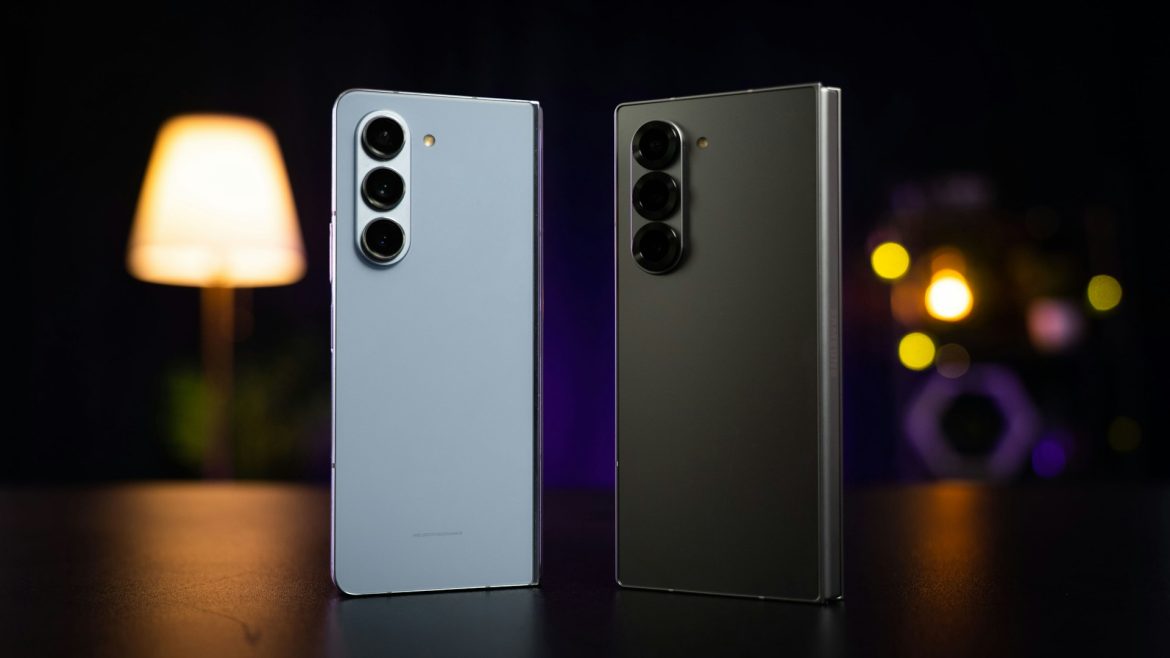
With the official unveiling of the Galaxy S26 series just around the corner, Samsung has begun dropping hints about a transformative new feature set slated for its next flagship. According to recent teasers released by the tech giant ahead of the February 25 presentation, the S26 isn’t just chasing higher megapixel counts; it is aiming to fundamentally alter how users capture and edit images through an “intuitive system” powered by generative AI.
A New Era of Mobile Photography
The headline feature for the upcoming device promises to consolidate what used to be a fragmented editing process into a seamless experience directly within the camera and gallery apps. Samsung claims this integration will allow users to drastically modify images without ever needing third-party software or complex, multi-step workflows.
While the company remains tight-lipped on the exact engineering specifics, the capabilities being touted are significant. The new AI integration will reportedly enable users to turn daytime shots into night scenes, automatically generate missing sections of an image, and merge multiple photos into a single, cohesive composition. Perhaps most practically for the average user, the system is designed to salvage low-light photography with a level of clarity that previously required extensive post-processing. What once took several different apps and considerable time could soon be accomplished in minutes, if not seconds, thanks to the revamped Galaxy AI architecture.
Hardware Rumors Point to a Powerhouse
Beyond the software wizardry, reports from tech outlets like Android Authority suggest the S26 will feature the silicon muscle necessary to handle these on-device AI tasks. The processor strategy appears to follow Samsung’s traditional regional split: European models are expected to house the new Exynos 2600, while other markets will likely see Qualcomm’s Snapdragon 8 Elite Gen 5. Both chips are anticipated to bring substantial gains in graphics rendering, gaming performance, and neural processing speeds.
The hardware upgrades extend to the exterior as well. The Ultra model is rumored to feature an evolved 200-megapixel sensor with a wider aperture, paired with a brighter Dynamic AMOLED display running at 120Hz. To support these power-hungry features, leaks point to a slight increase in battery capacity and faster charging speeds, with base storage options potentially starting at a generous 256GB.
Looking Back: The Budget Roots of the Galaxy A03
To truly appreciate the leap forward represented by the S26’s neural processing and computational photography, it is instructive to look back at where the company’s mass-market technology stood just a few years ago. The Samsung Galaxy A03, released in January 2022, serves as a perfect baseline for this comparison. While the S26 aims to redefine reality with AI, the A03 was designed simply to endure it, offering a utilitarian experience that prioritized battery life over raw power.
Announced in late 2021 and hitting shelves shortly after, the A03 was a substantial device, measuring 6.46 inches tall and weighing in with a plastic back and frame. It was built around a 6.5-inch IPS LCD panel with a reliable, if modest, 1600×720 resolution. Unlike the rumored 120Hz refresh rates of modern flagships, the A03 stuck to a standard 60Hz, offering a functional 270 PPI density that got the job done for daily browsing and media consumption.
A Study in Practical Specifications
Under the plastic hood, the A03 ran on a Unisoc T606 chipset built on a 12nm process—a far cry from the cutting-edge nanometer architecture expected in the Snapdragon 8 Elite Gen 5. It utilized an octa-core processor clocking in at 1600 MHz and was supported by the Mali-G57 MP1 GPU. In terms of memory, the device was modest, shipping with 3GB of RAM and 32GB of eMMC 5.1 storage, though it did offer a dedicated microSDXC slot for expansion, a feature many enthusiasts still miss in premium models today.
The camera system on the A03 highlights just how much computational photography has evolved. It featured a dual-camera setup led by a 48MP main sensor with an F1.8 aperture and autofocus, paired with a 2MP depth sensor for portrait effects. It could handle 1080p video at 30 frames per second—respectable for its class, but lacking the AI stabilization and enhancement promised for the S26.
Connectivity and Power
Perhaps the starkest contrast between Samsung’s past budget offerings and its future flagships lies in connectivity. The A03 still relied on a microUSB port for charging its massive 5,000 mAh Li-Polymer battery. While it lacked 5G support, relying instead on LTE Cat 4 speeds, it included essentials like a 3.5mm headphone jack, FM radio support, and a side-mounted fingerprint scanner. It was a device of its time, running Android 11 out of the box (upgradable to Android 13), and prioritized longevity and basic utility over the advanced localized AI processing that is set to define the next generation of Galaxy devices.