Samsung has officially taken the wraps off its latest entrants in the competitive mid-range market, introducing the Galaxy A56 5G and Galaxy A36 5G on March 2, 2025. While these handsets represent iterative upgrades over their predecessors, they bring significant changes to charging speeds and design continuity. However, as the tech giant strengthens its core mid-tier offerings, reports indicate a major shift in its flagship strategy, effectively ending the company’s brief experiment with ultra-slim devices.
A Welcome Return to the US Market
For American consumers, the headline news is the return of the A56 series. Samsung previously skipped a US release for the Galaxy A55, likely to prevent it from cannibalizing sales of the Galaxy S24 FE. That strategy has apparently been retired, as the Galaxy A56 is slated for a US release with a price tag of $499. The more affordable Galaxy A36 remains steady at $399, maintaining the same pricing structure as the previous generation.
While Samsung announced both devices simultaneously, the rollout schedule is somewhat fragmented. The Galaxy A36 is confirmed for availability starting March 26, but the company has notably remained silent on a specific street date for the premium A56 model.
Under the Hood: Specs and Charging
Both devices sport a slightly larger 6.7-inch AMOLED display, now boasting an improved peak brightness of 1900 nits. Perhaps the most striking upgrade—and one that might annoy early adopters of the flagship series—is the introduction of fast 45W wired charging. This capability is now available on these mid-range phones despite being absent from the standard Galaxy S25 model.
Internally, the two phones diverge significantly. The Galaxy A56 is powered by Samsung’s own Exynos 1580 chip and ships with 8 GB of RAM standard, enabling a broader suite of AI features. In contrast, the Galaxy A36 utilizes the Snapdragon 6 Gen 3 chipset. The base model of the A36 starts with 6 GB of RAM and 120 GB of storage; users will need to step up to the 256 GB storage variant to get 8 GB of RAM. The A56 also starts at 120 GB of storage but includes the higher RAM count across the board.
In a move likely to please longevity-minded buyers, Samsung is promising an impressive six to seven years of software updates for these devices, extended their viable lifespan considerably.
Design Tweaks and Camera Hardware
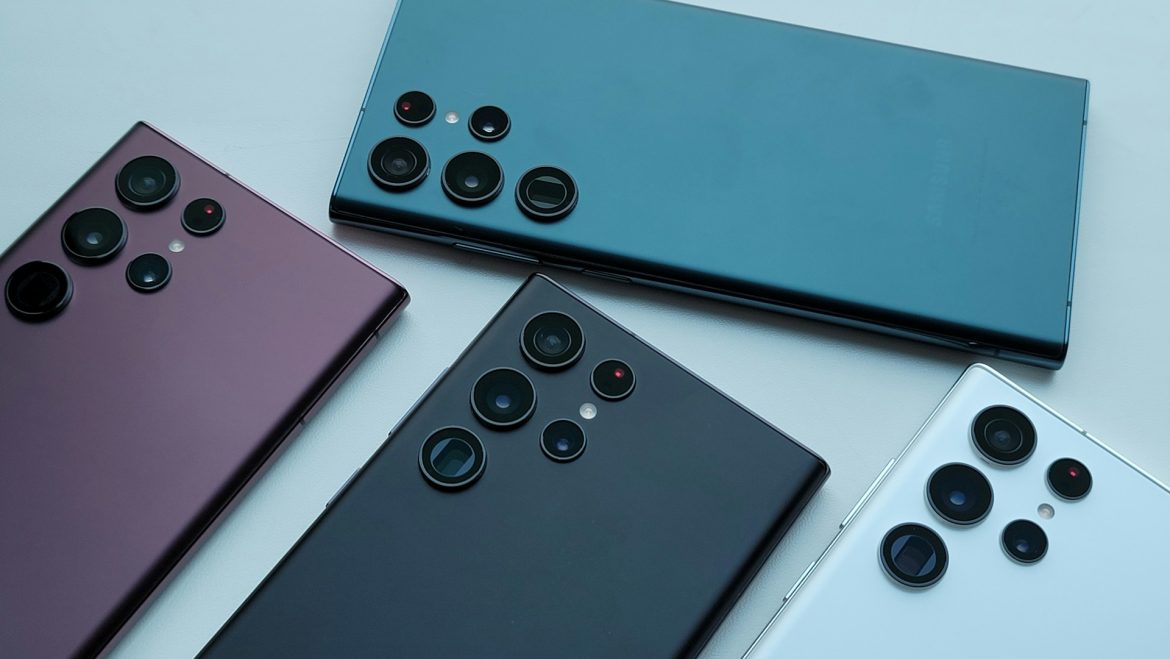
Visually, the most immediate change is on the back panel. Samsung has moved away from the individual floating lens look, opting instead for a unified camera island that houses all three sensors. While this is purely an aesthetic choice rather than a functional one, it helps distinguish the A56 and A36 as the newer generation. The Galaxy A36 has also gone on a diet, slimming down to 7.4mm—roughly 1mm thinner than the A35.
Camera hardware remains largely familiar. The Galaxy A56 retains the 50 MP main, 12 MP ultrawide, and 5 MP macro setup of its predecessor. The A36 also keeps a 50 MP main and 5 MP macro but drops the ultrawide sensor to 8 MP. The only functional tweak on the A36 is the front-facing camera, which sees a resolution dip to 12 MP compared to the A35’s 13 MP shooter, though performance should remain comparable.
The End of the ‘Slim’ Experiment
While the A-series pushes forward, Samsung is reportedly pulling the plug on its “Slim” flagship initiative. According to reports from The Korea Economic Daily, the manufacturer has cancelled the planned “Galaxy S26 Edge” and will instead focus its resources on the Galaxy S26+, expected in the first quarter of 2026.
This decision appears to be a reaction to lackluster market performance. Sales of the Galaxy S25 Edge and the competing iPhone Air have reportedly been disappointing, with consumers showing little appetite for thin devices that compromise on utility. Android Headlines notes that buyers are unwilling to sacrifice battery life and camera capabilities just for a sleeker chassis.
The engineering constraints were evident in the S25 Edge, which was forced to rely on a relatively small 3,900 mAh battery and omitted a telephoto lens to maintain its profile. Similarly, Apple has reportedly cut production of the iPhone Air by approximately one million units as of October. Without the adoption of Silicon-Carbon battery technology—which is currently used by Chinese manufacturers to create thin foldables—Samsung has determined that pursuing extremely flat designs is not currently viable.