If you want to understand where Honor is taking its flagship lineup, you have to look at the baseline they established not too long ago. When the Magic7 Pro hit the streets in January 2025, it was essentially a brute-force flex of mobile engineering. Coming in with a hefty €1299 MSRP, the phone was built around the 3nm Snapdragon 8 Elite, packing an octa-core Oryon setup that easily chewed through heavy workloads. Honor crammed a massive 5270 mAh battery into a chassis that somehow stayed under nine millimeters thick, and they slapped an IP69 rating on the device just to prove a point about durability. It was unapologetically premium, right down to the ultrasonic in-screen fingerprint reader and top-tier connectivity like Wi-Fi 7 and Bluetooth 5.4. They offered it in a few sleek finishes—Moon Shadow Gray, Snow White, Sky Blue, and Velvet Black—but the real story was always the sheer horsepower under the hood.
The camera array on the Magic7 Pro set a high bar that dictated the company’s trajectory. We’re talking about a triple-threat setup anchored by a 50MP main sensor with a massive 1/1.3″ footprint, optical image stabilization, and a variable F1.4 to F2.0 aperture. They paired that with a 50MP ultrawide and a frankly ridiculous 200MP periscope telephoto pushing 3x optical zoom. It was the kind of hardware configuration meant to overpower lighting challenges with raw specs and high-end glass. But sheer megapixels can only take a brand so far in a market where image processing and specialized color science have become the real battlegrounds.
That brings us to the incoming Magic 9 series, slated for an October 2026 debut. Based on a comprehensive spec dump from tipster DirectorShiGuan, Honor is drastically rethinking its approach to both design and imaging. The biggest bombshell here is the screen. The era of the waterfall display is effectively dead at Honor. While the intervening Magic 8 Pro doubled down on a quad-curved panel that melted elegantly over all four edges, the Magic 9 lineup is going completely flat. No exceptions across any of the models.
This isn’t a downgrade, it’s a heavily requested course correction. Those quad-curved screens were absolute eye candy in press renders, but they brought a ton of daily baggage. Edge distortion, phantom touches, and the sheer nightmare of applying a glass screen protector made them a frustrating experience for a lot of users. Factor in the higher manufacturing costs and fragile corners, and it’s easy to see why Honor is pulling the plug. They are prioritizing everyday usability and structural durability over flashy boardroom aesthetics. Samsung already read the room and made the exact same call with the Galaxy S25 series, so Honor is really just following a broader industry shift back to practicality.
The most fascinating pivot for the Magic 9, though, is how it handles photography. Instead of relying solely on the massive sensors that defined the Magic7 Pro, Honor is leaning into a specialized ARRI imaging partnership. We first saw this collaboration on the highly experimental Robot Phone, but bringing ARRI’s cinematic expertise to a mainline flagship changes the math entirely. Honor is positioning the Magic 9 to go toe-to-toe with Leica-tuned Xiaomi rigs and Hasselblad-backed OPPO devices. Having ARRI’s pro-grade color science and cinema-calibrated video modes baked directly into the camera app gives Honor a distinct, professional identity that hardware alone can’t buy. The real test will be seeing how this tuning, developed from actual film production workflows, translates to everyday shooting conditions.
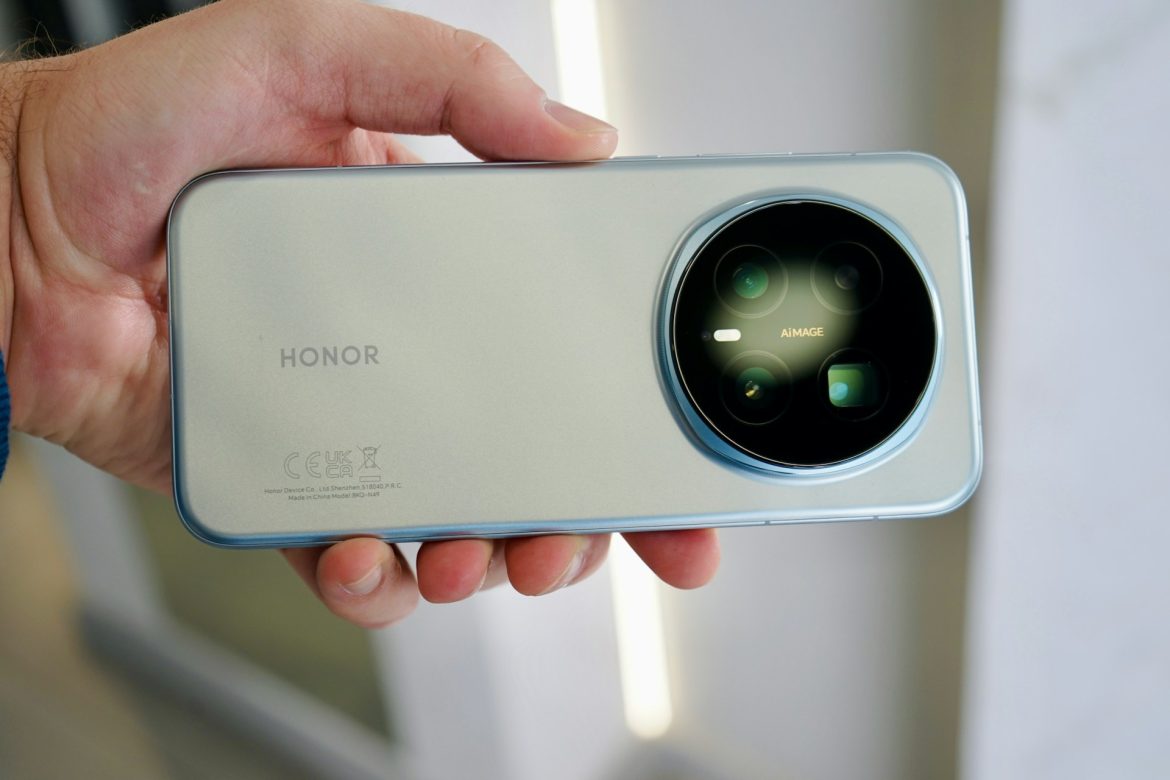
There are definitely still some blank spots on the spec sheet. We know MagicOS 11 is launching alongside the new phones with a heavy dose of fresh AI features and software upgrades, but the exact chipset, display resolutions, and battery capacities are still under wraps. Design-wise, the leak pointed to a total visual refresh, leaving us wondering if Honor is finally ditching that massive circular camera housing that dominated the rear of the Magic 8 series. Whether they keep the oversized module or go with something more understated, the transition from the spec-heavy brute force of the Magic7 Pro to the refined, flat-screen pragmatism of the Magic 9 shows a company finally settling into a mature design language.